
What it lets you do
- Sitting through eight hours at a desk and standing up at 6pm without wincing.
- Picking something heavy up off the floor and putting it back down again.
- Carrying a suitcase up a flight of stairs and walking normally at the top.
The lower back: the pillar that keeps your spine upright under load.
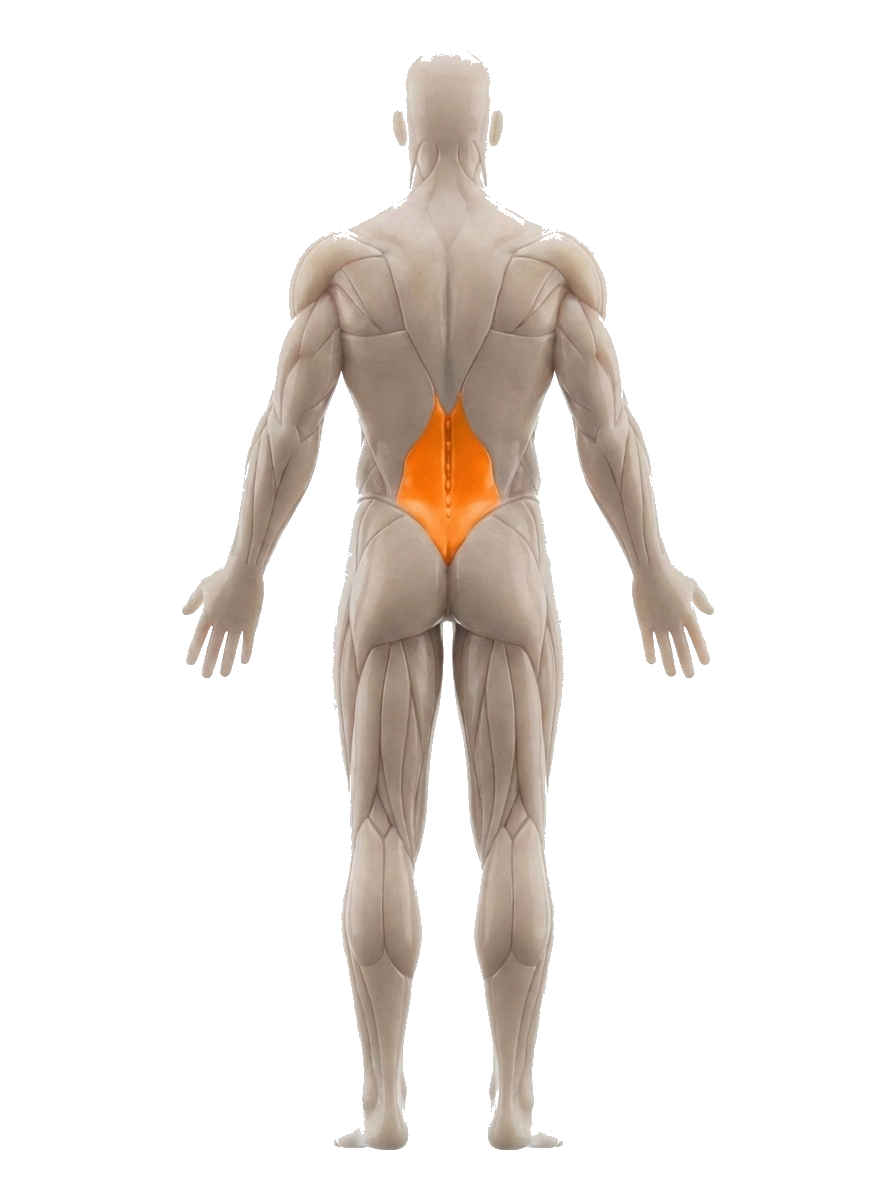
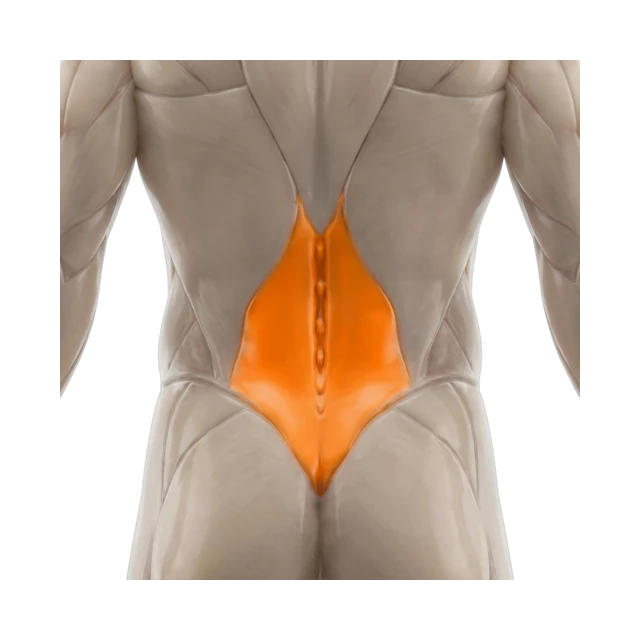
Your lower back. The two columns running up either side of your spine that hold you upright all day without you ever thinking about it.
A wide, dull tightness in the strip just above your hips. It should feel like pressure spread across the whole area. If it narrows into one sharp point, stop the set and check your position.
Lifting stops feeling safe. You hesitate before you pick things up, then you start asking someone else to, and the muscle gets weaker for the lack of use.
The lower back is dominated by the erector spinae, a group of long muscles that run along both sides of the spine. In the lumbar region they extend the spine, resist rounding under load and help control side bending. Deeper still, the multifidus muscles stabilise each vertebra individually.
These muscles work isometrically in almost every standing exercise, from squats to overhead presses, and they are the primary movers in back extensions and good mornings. A strong, well-conditioned lower back is one of the best protections against the pain that so many desk-bound clients experience.
The volume and frequency below are programming starting points for the lower back, to be adjusted to each person's level and recovery.
Hyper-extending at the top of back extensions instead of stopping at a neutral spine.
Rounding the lower back on deadlifts and rows because the load is too heavy.
Training the lower back to failure the day before a heavy squat or deadlift session.
Avoiding lower-back work entirely after an episode of pain, which usually leaves it weaker.
10 matching exercises
This muscle shares an exercise category with the closest functional group.
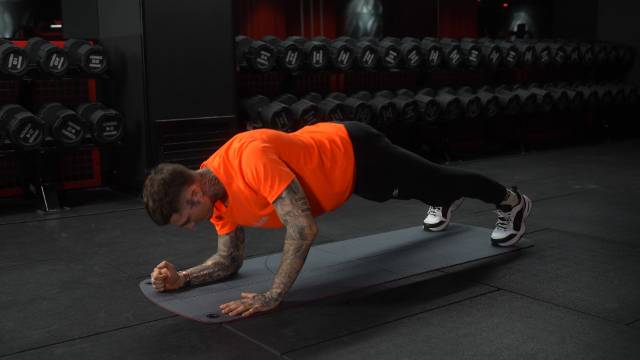
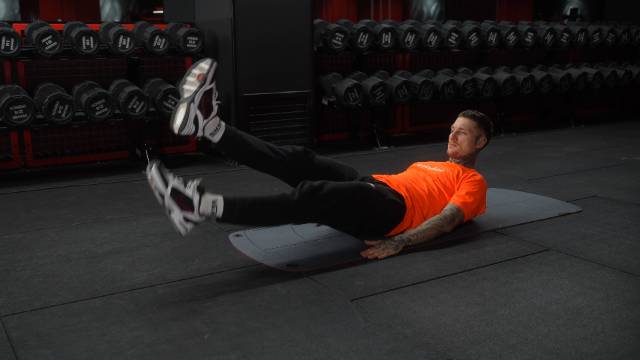
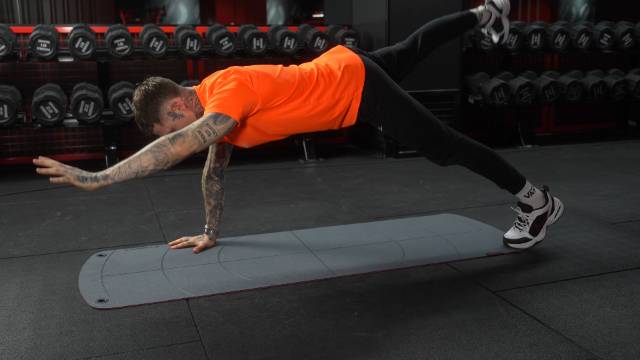
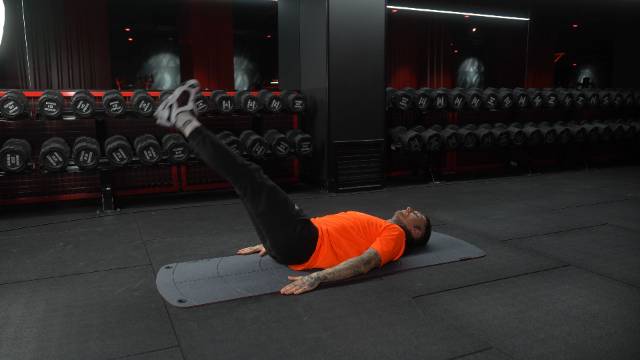
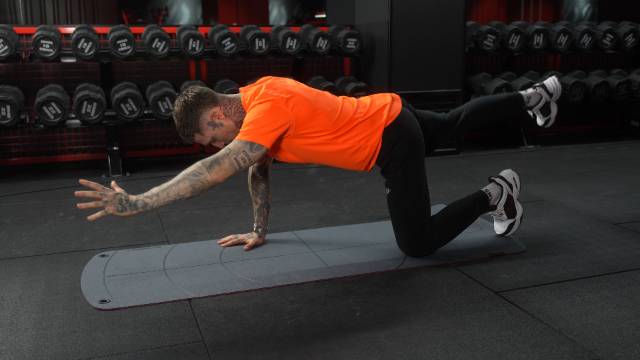
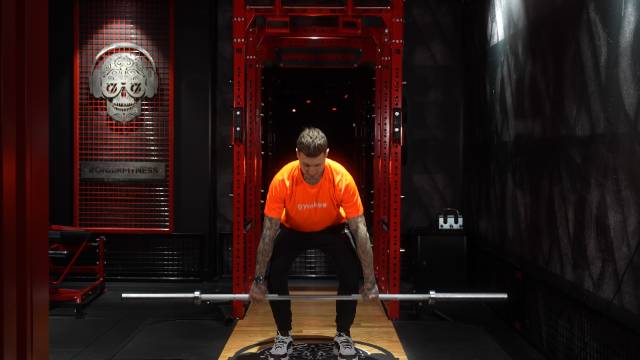
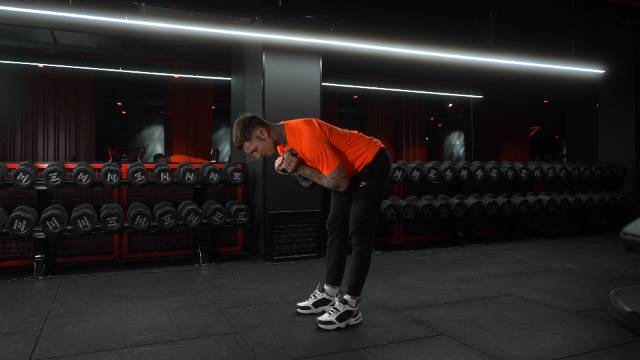
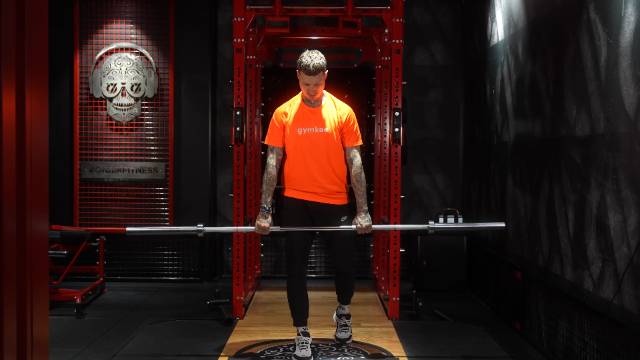
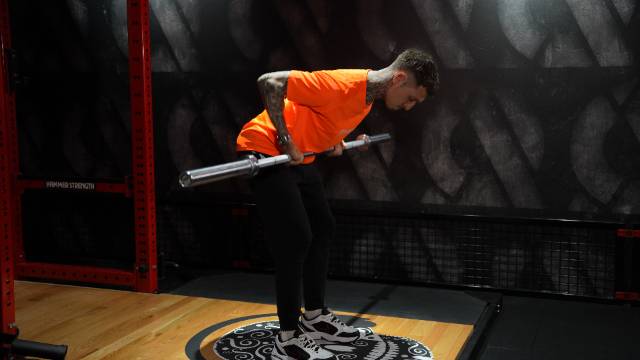
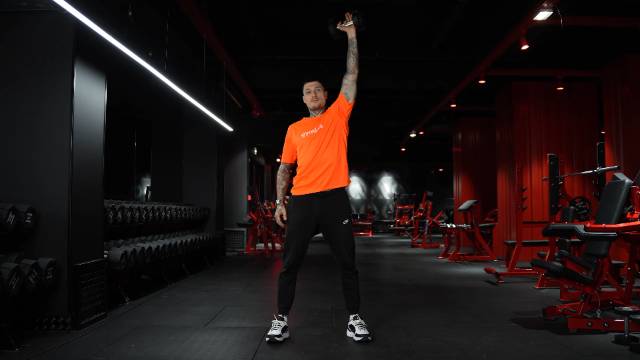
For most people with non-specific back pain, gradual strengthening is one of the most effective approaches. Start with bird dogs, bodyweight back extensions and light hinges, and progress slowly. Persistent or radiating pain should be assessed by a health professional.
Yes. The erector spinae hold the spine in position through the entire lift. Romanian deadlifts and good mornings place even more emphasis on the lower back and hamstrings.
Film your sets from the side. The lower back should keep the same neutral curve from start to finish. If it changes shape as the weight rises, lighten the load and work on bracing.
Create personalized training programs with Gymkee. Access 550+ exercises in 4K with male and female videos, multiple angles, and step-by-step instructions. Build custom workouts and deliver a professional experience to your clients.
