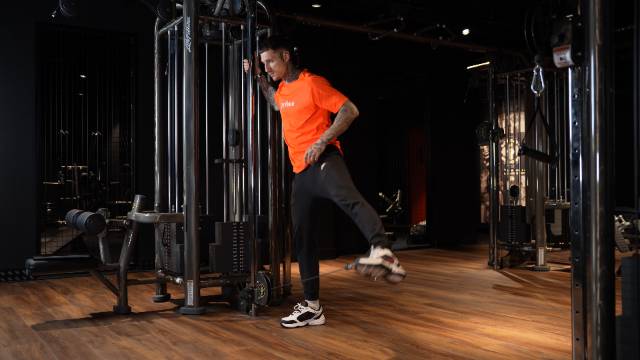
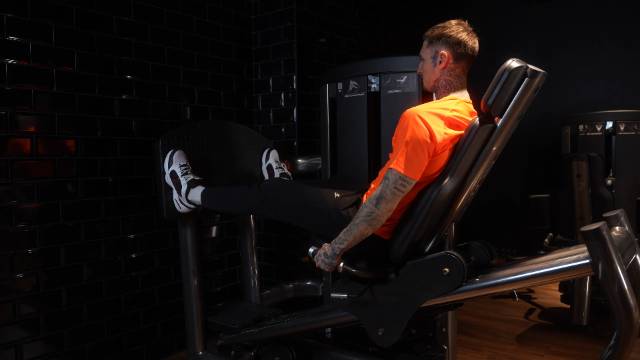
What it lets you do
- Staying upright when your foot slips on a wet tile floor.
- Getting in and out of the car in a tight parking space.
- Cutting hard in a game and having your knee hold its line.
The inner thigh, and a hidden contributor to every squat.
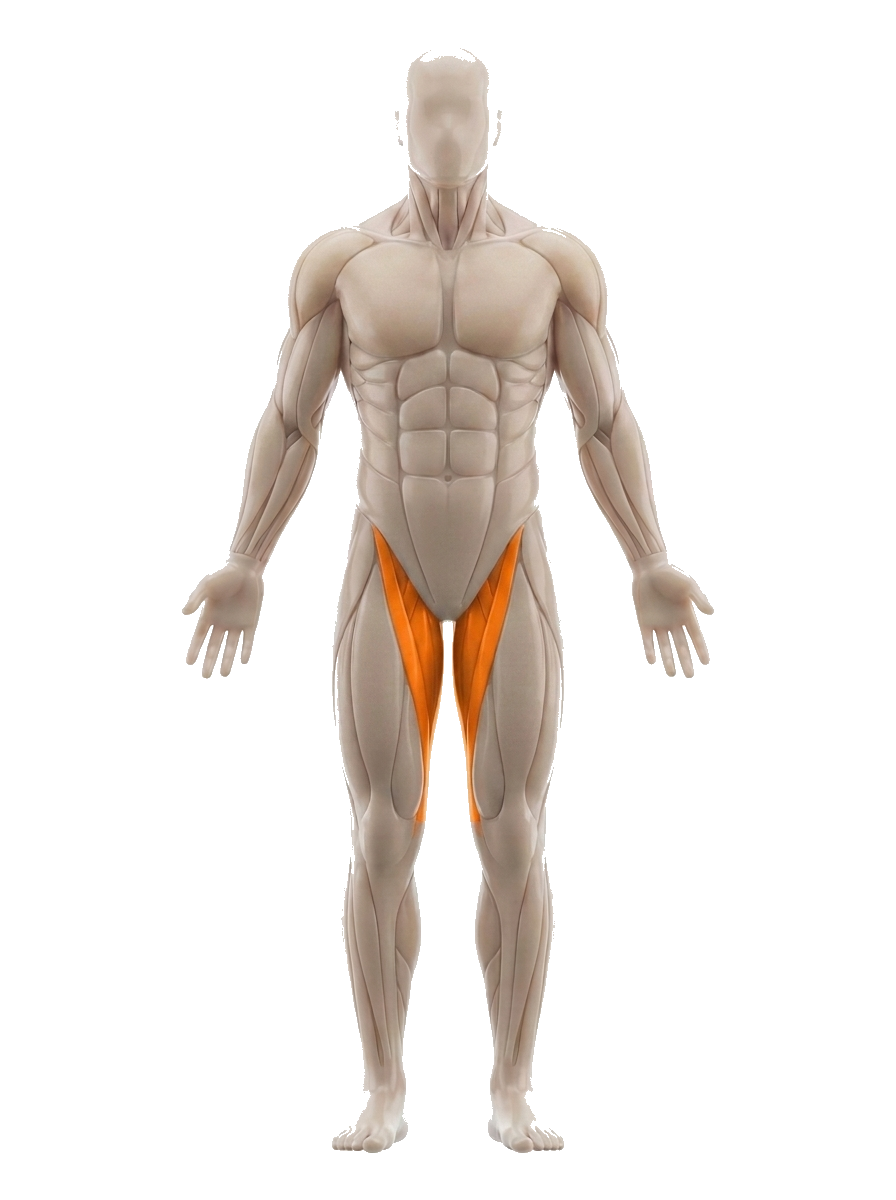
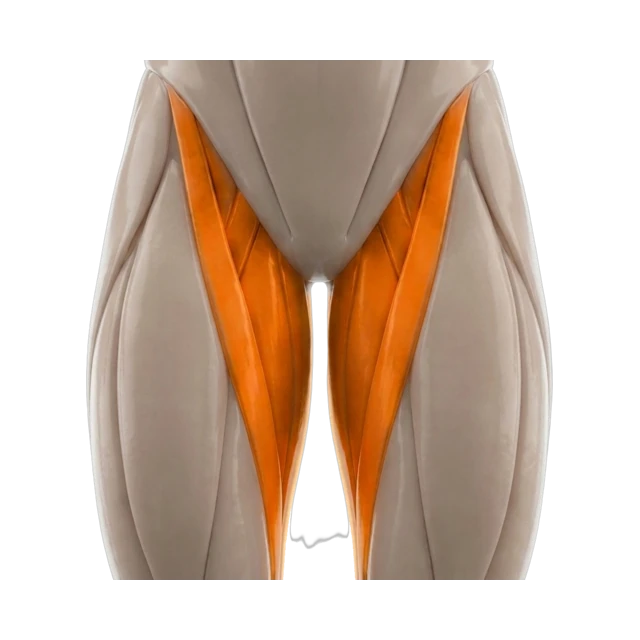
The inside of your thigh. They pull your legs toward each other, and mostly they keep your knees from collapsing inward when everything else is busy.
The inside of your thigh, from the groin down toward the knee. On a wide-stance squat you'll feel them stretch at the bottom. It should read as a stretch, not a pull, and if it goes sharp near the groin you widened too fast.
You'll meet them the first time you play a real game after a winter off. Groin strains are a classic in anything with fast direction changes, and they mostly happen to people who never trained the inside of their legs.
The adductor group sits on the inside of the thigh: adductor magnus, longus and brevis, plus the gracilis and pectineus. They pull the leg toward the midline and stabilise the pelvis when you stand on one leg. The adductor magnus is large enough that it also acts as a hip extensor, working alongside the glutes and hamstrings.
The adductors are heavily involved in deep squats, sumo deadlifts and lateral movements such as skating, cutting and side lunges. They are frequently strained in football and hockey, and strengthening them is one of the most reliable ways to reduce groin injuries.
The volume and frequency below are programming starting points for the adductors, to be adjusted to each person's level and recovery.
Stretching the adductors aggressively without strengthening them.
Loading the adduction machine heavily with a short, bouncing range.
Ignoring the adductors until a groin strain forces the issue.
Rushing side lunges with the torso collapsed forward.
Deep squats and sumo variations already load the adductors. Direct work such as Copenhagen planks is worth adding for athletes in cutting sports or clients with a history of groin pain.
The adductor magnus helps extend the hip out of the bottom position, especially with a wider stance. Sore inner thighs after deep squats are a sign they are working.
Yes, when used with a controlled tempo and a full range. It is an easy way to add volume for the inner thigh without technical demand.
Create personalized training programs with Gymkee. Access 550+ exercises in 4K with male and female videos, multiple angles, and step-by-step instructions. Build custom workouts and deliver a professional experience to your clients.