
What it lets you do
- Pushing a stalled car out of an intersection.
- Shoving a heavy couch across the living room to vacuum behind it.
- Catching yourself on your hands when you trip.
Every horizontal push starts here.
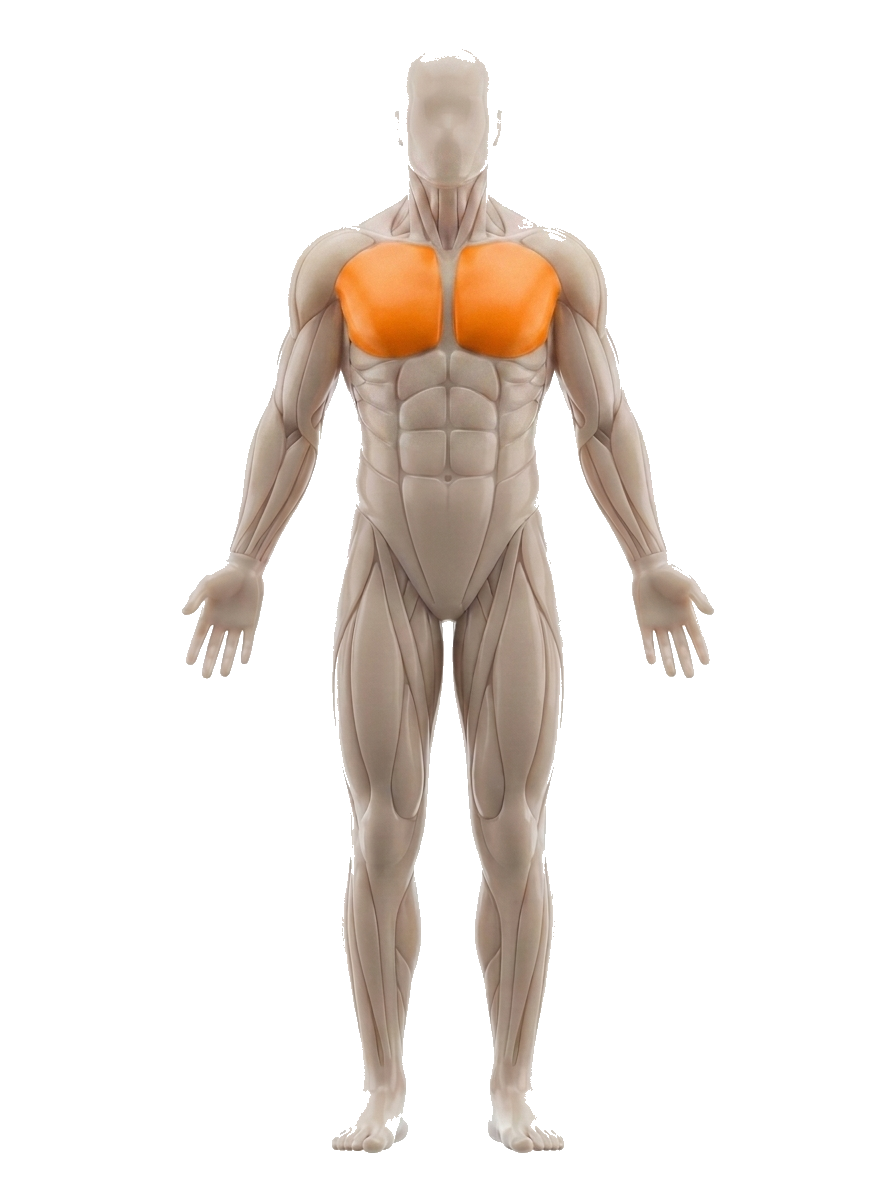
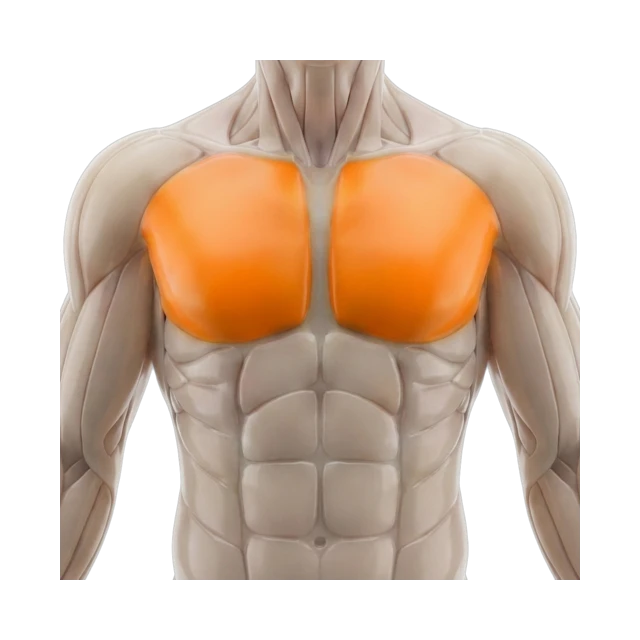
The two big muscles across the front of your ribcage. They run from your collarbone down to the bottom of your sternum, and they're most of what fills out a shirt.
Across the middle of your chest, widest at the bottom of the press when your arms are stretched. If your shoulders are burning more than your chest, the bar is probably traveling too high.
Your shoulders end up doing the pushing for you. They're the smaller and more delicate joint of the two, and leading was never their job.
The chest is built around the pectoralis major, a fan-shaped muscle that runs from the collarbone and sternum to the upper arm. It has two heads: the clavicular (upper) head, which pulls the arm up and across the body, and the sternal (lower) head, which pulls the arm down and in. Underneath sits the pectoralis minor, a small stabiliser that anchors the shoulder blade to the ribcage.
Functionally, the pecs are the engine of horizontal pushing and adduction: bench presses, push-ups, flyes and dips. They also help with internal rotation of the shoulder, which is why chest work and shoulder health are closely linked. A strong, mobile chest improves pressing power, posture and upper-body stability.
The volume and frequency below are programming starting points for the chest, to be adjusted to each person's level and recovery.
Flaring the elbows to 90 degrees on the bench press, which loads the shoulder joint instead of the pecs.
Bouncing the bar off the chest to move more weight rather than controlling the eccentric.
Skipping incline work, which leaves the upper chest under-developed.
Pressing through a partial range of motion because the load is too heavy.
60 matching exercises
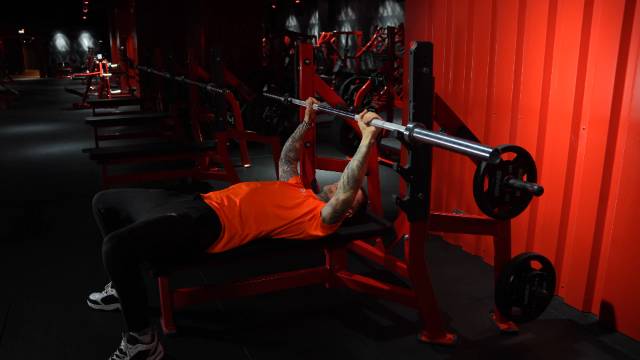
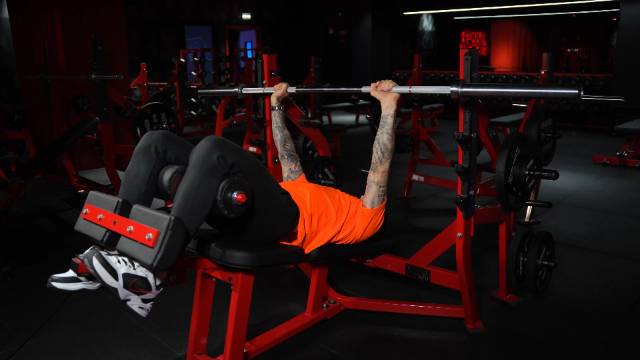
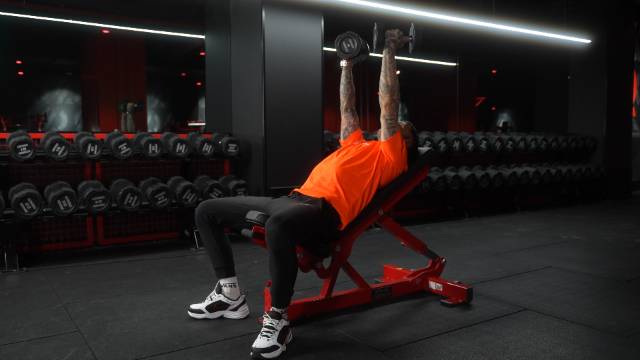
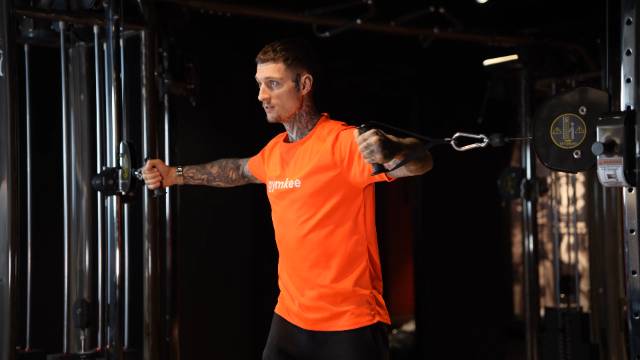
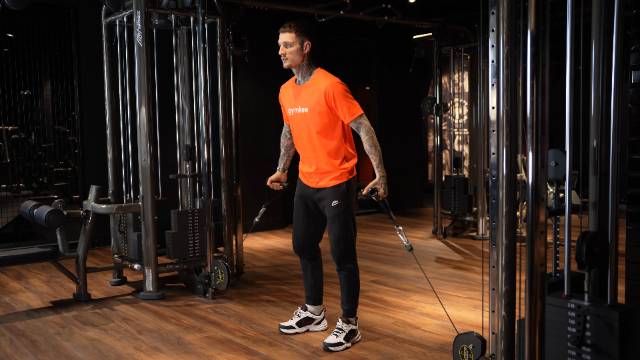
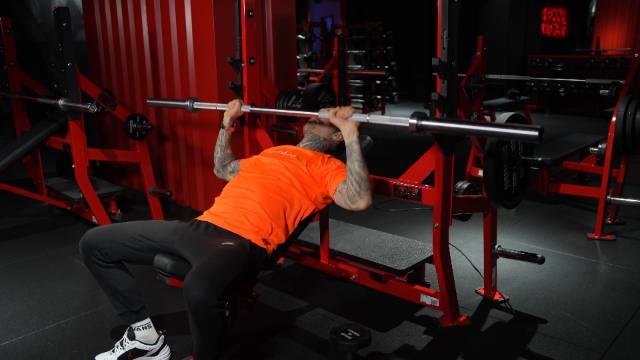
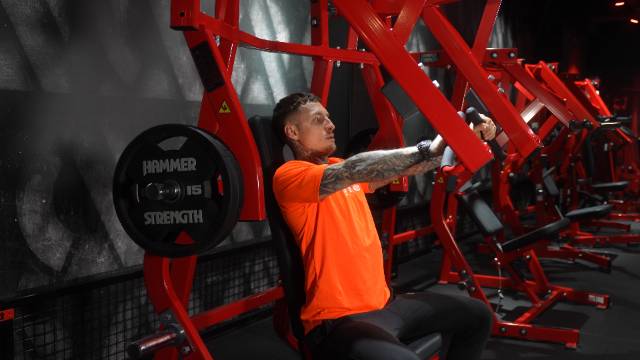
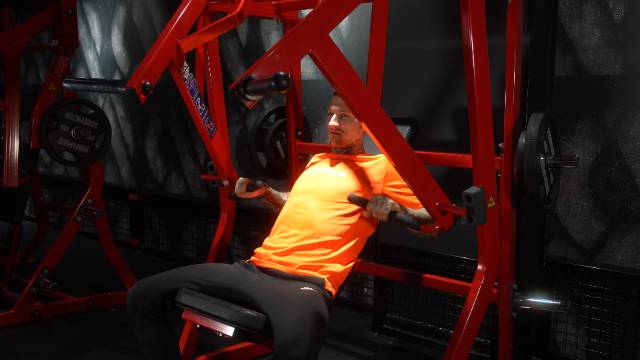
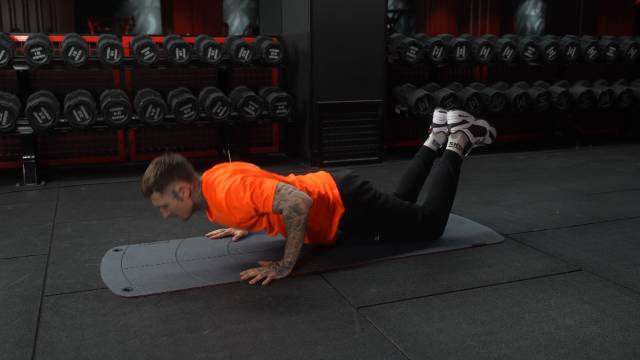
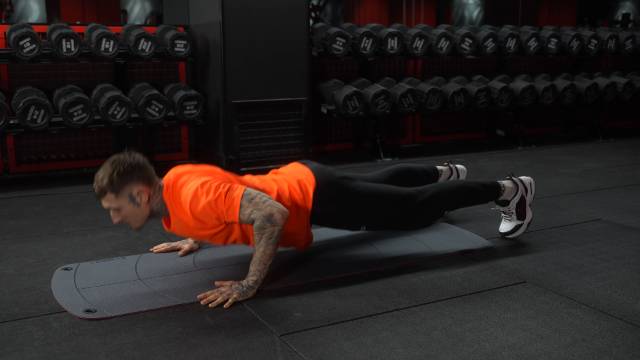
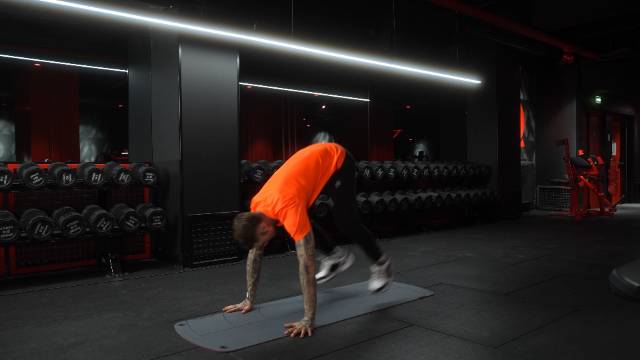
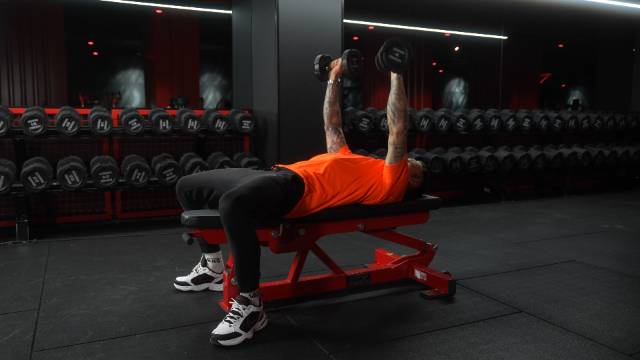
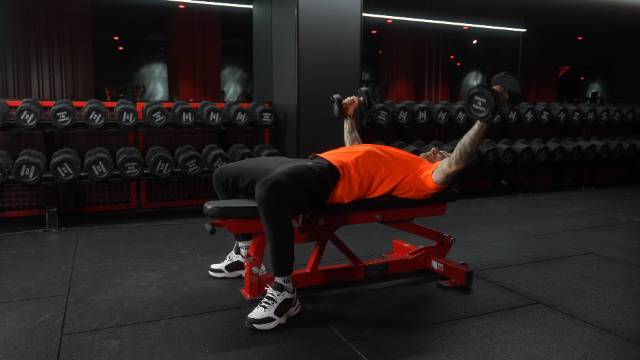
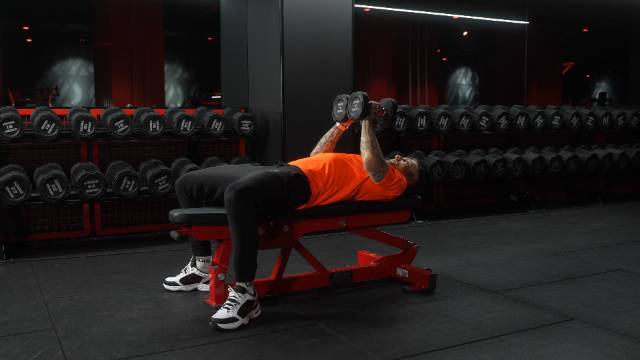
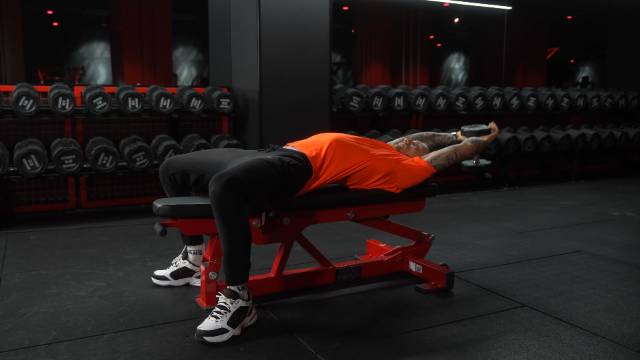
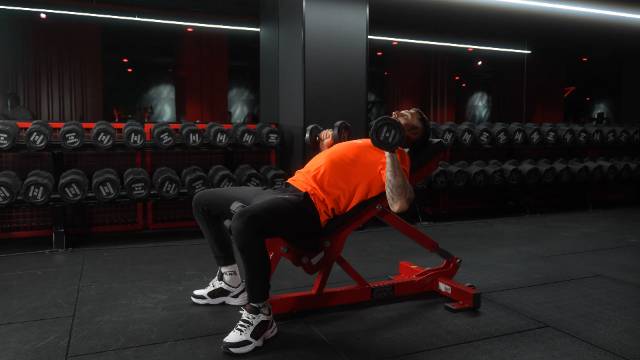
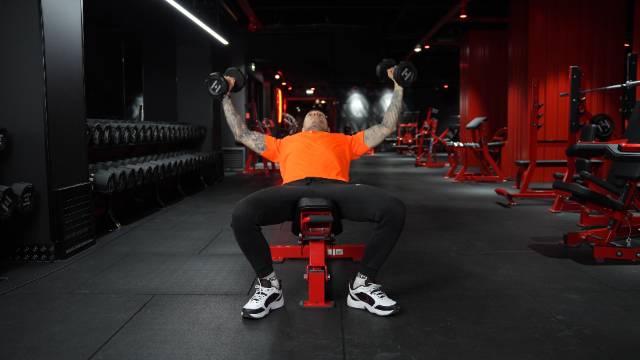
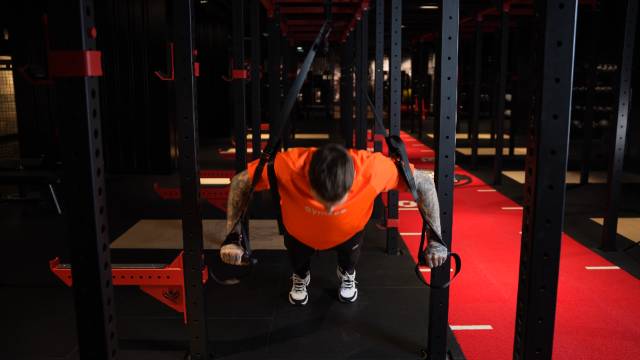
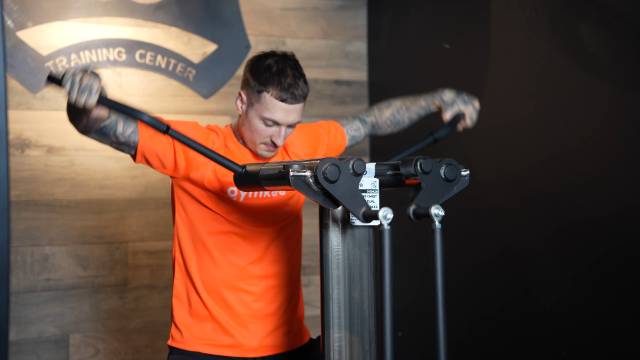
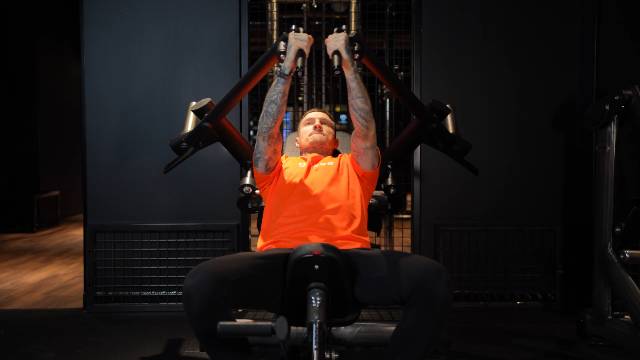
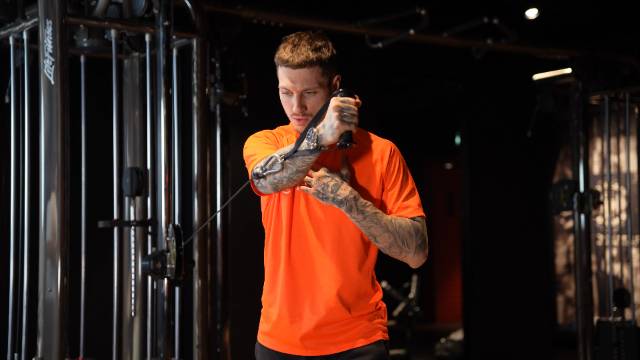
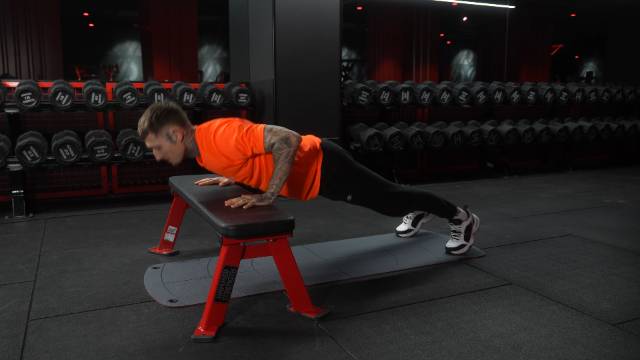
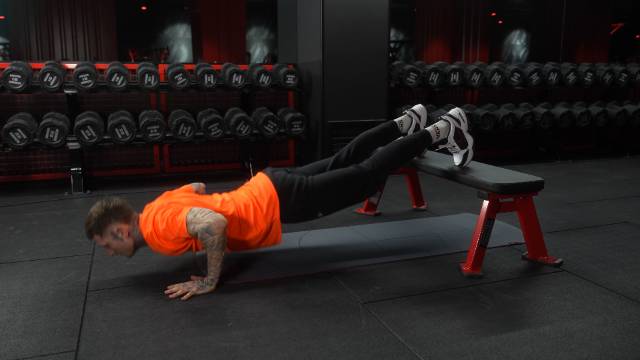
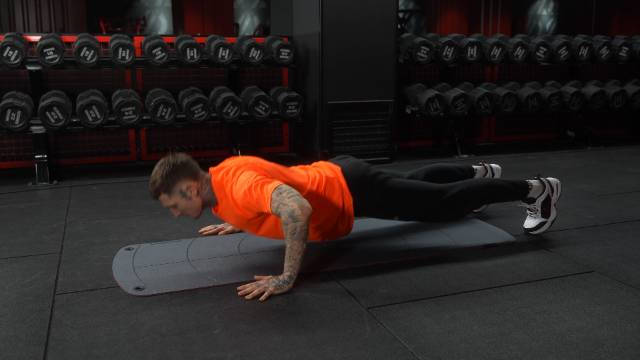
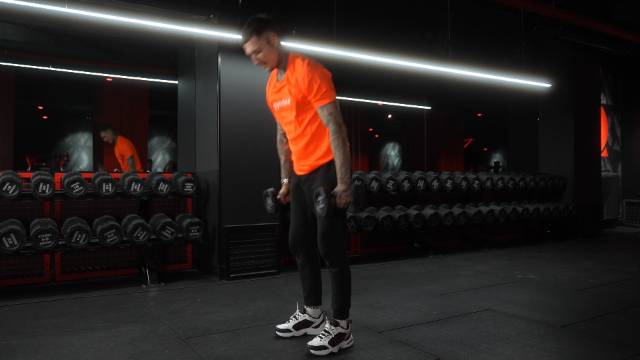
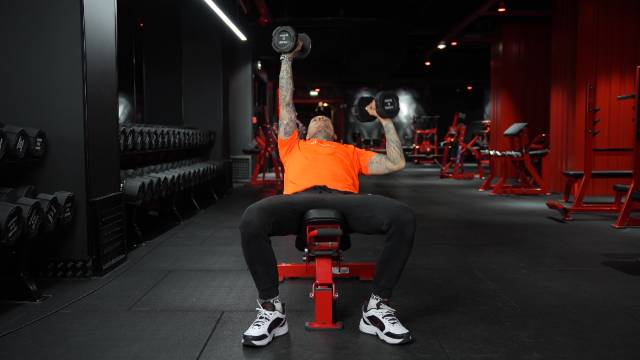
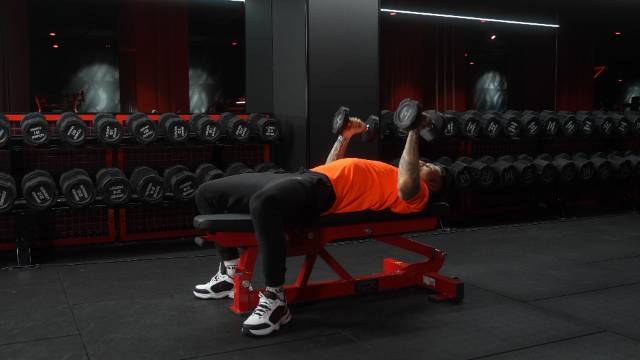
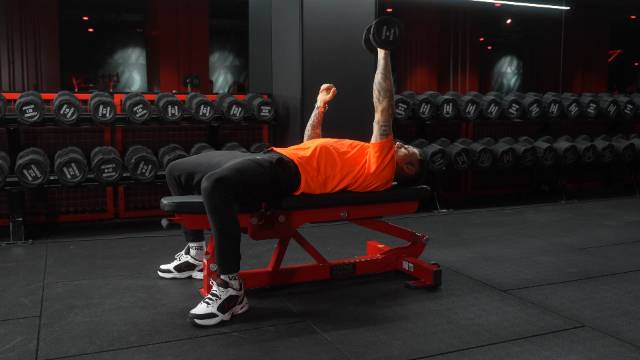
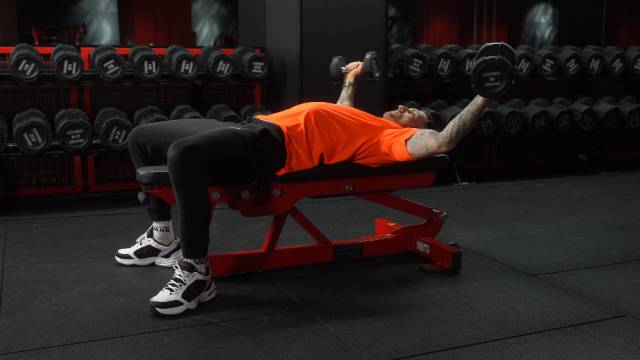
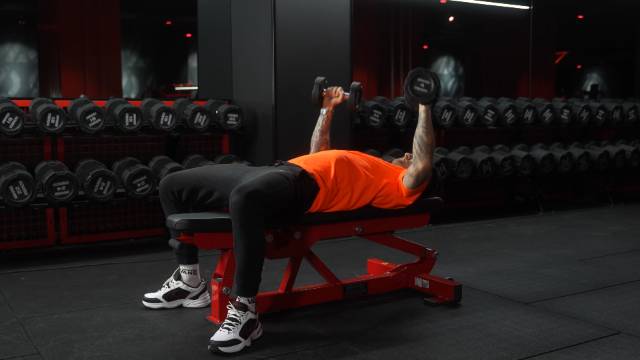
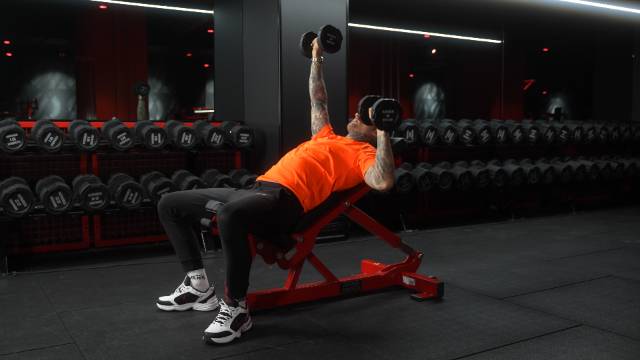
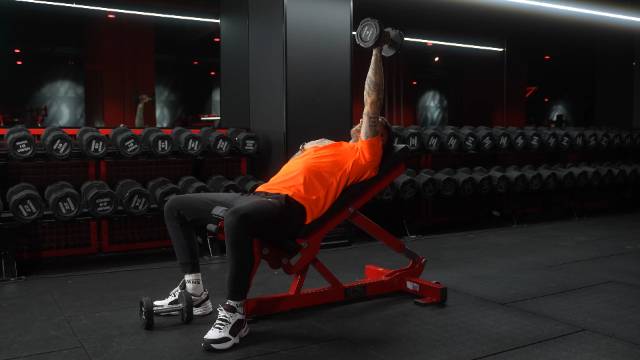
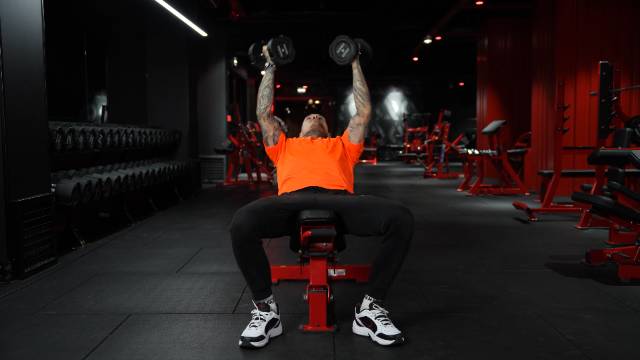
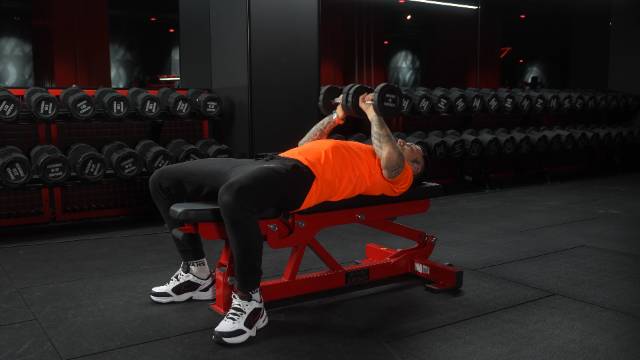
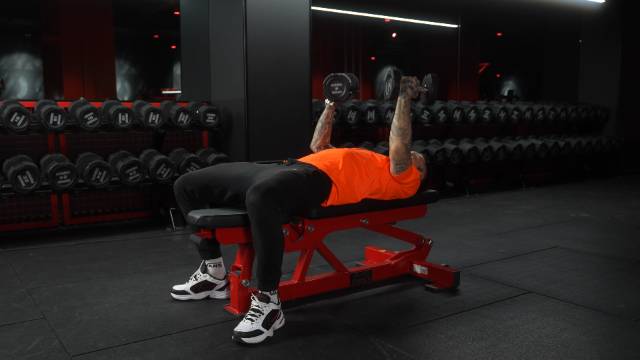
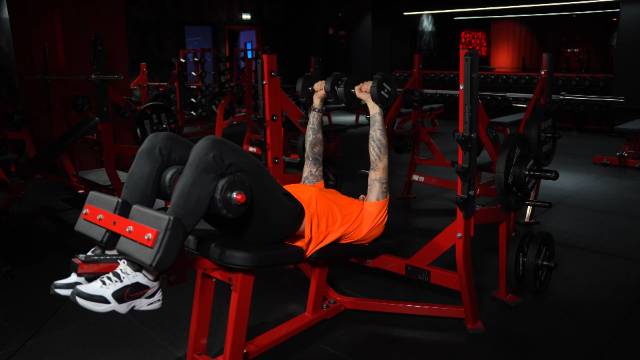
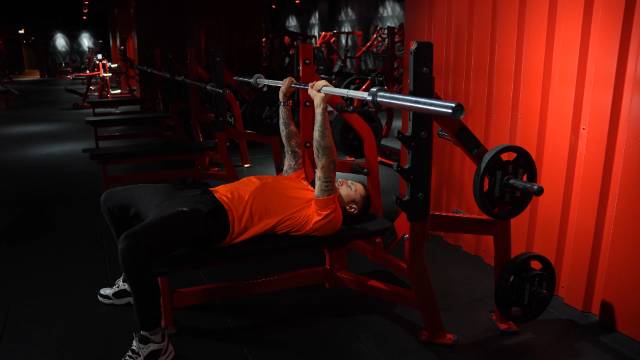
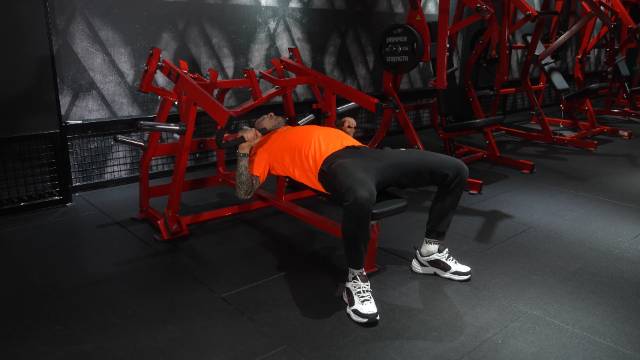
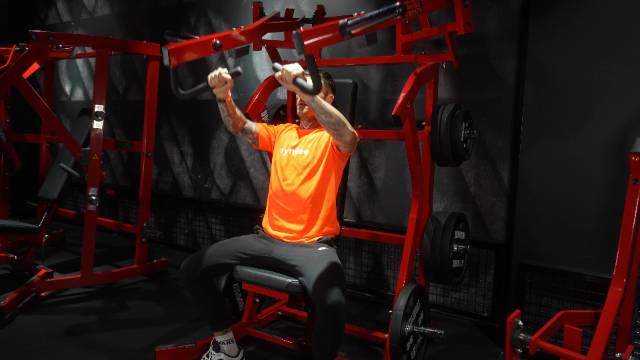
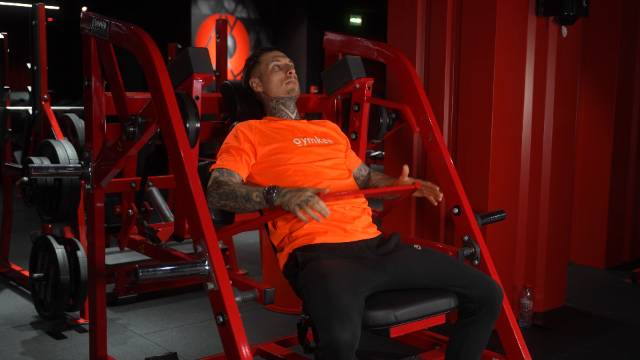
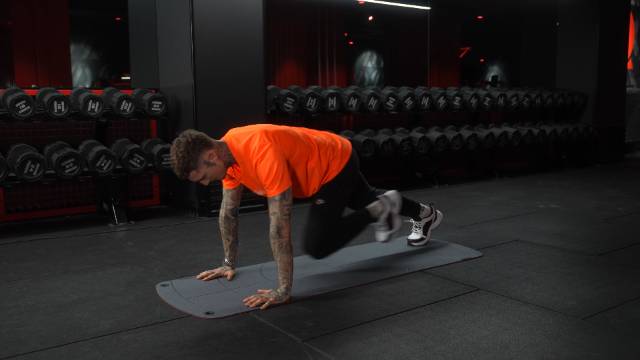
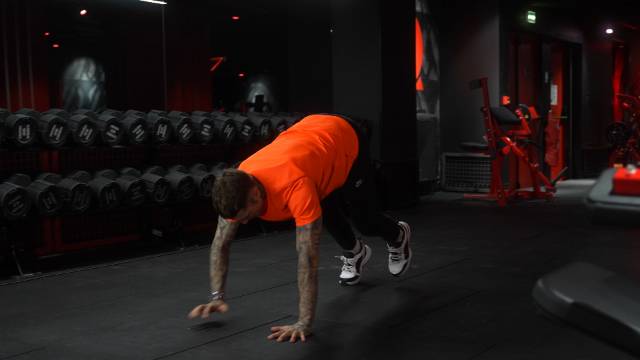
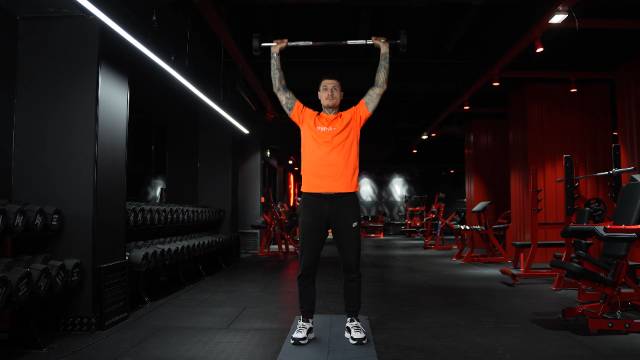
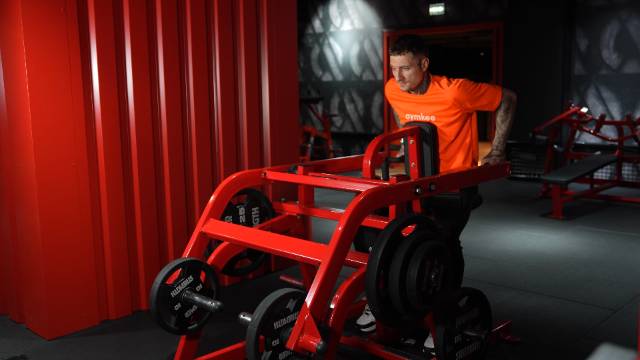
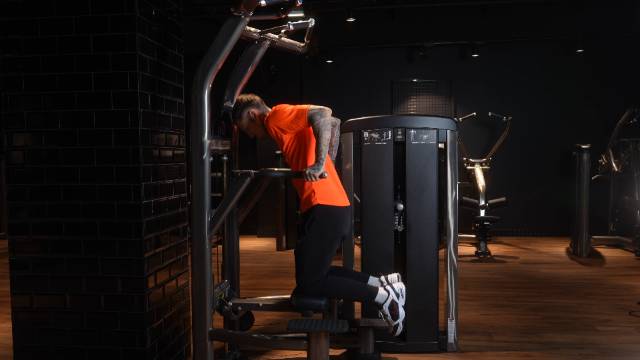
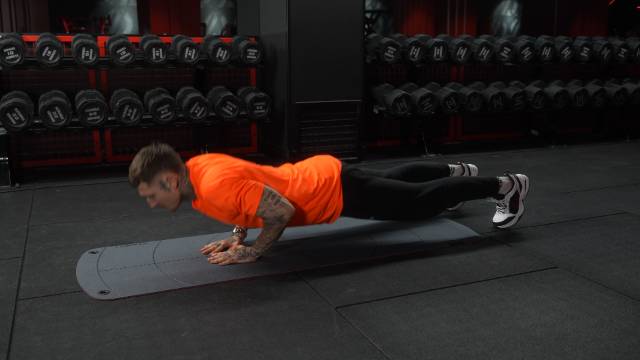
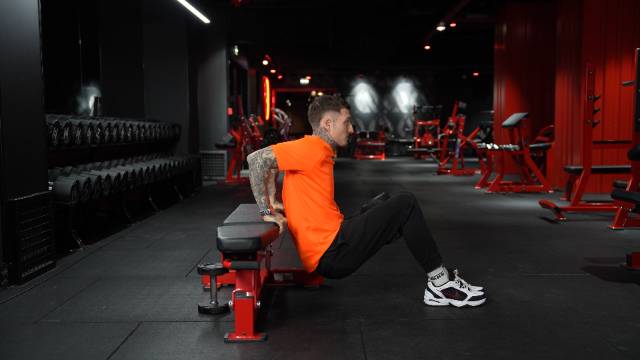
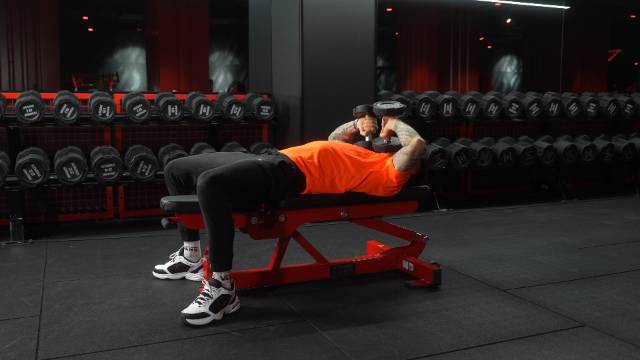
No. Dumbbell presses, flyes, cable crossovers, dips and weighted push-ups all load the pecs through a full range of motion. The barbell is convenient for progressive overload, not mandatory.
Usually because the elbows flare wide and the shoulder blades are not retracted. Tuck the elbows to roughly 45-60 degrees, pull the shoulder blades back and down, and keep a slight arch so the pecs take the load.
Use incline presses at 15-30 degrees and low-to-high cable flyes. Both put the arm in a position where the clavicular head does more of the work.
Create personalized training programs with Gymkee. Access 550+ exercises in 4K with male and female videos, multiple angles, and step-by-step instructions. Build custom workouts and deliver a professional experience to your clients.
